
Connect
© 2026 Kyekyekule Africa. All rights reserved.
kyekyekule.africa
© 2026 Kyekyekule Africa. All rights reserved.
kyekyekule.africa
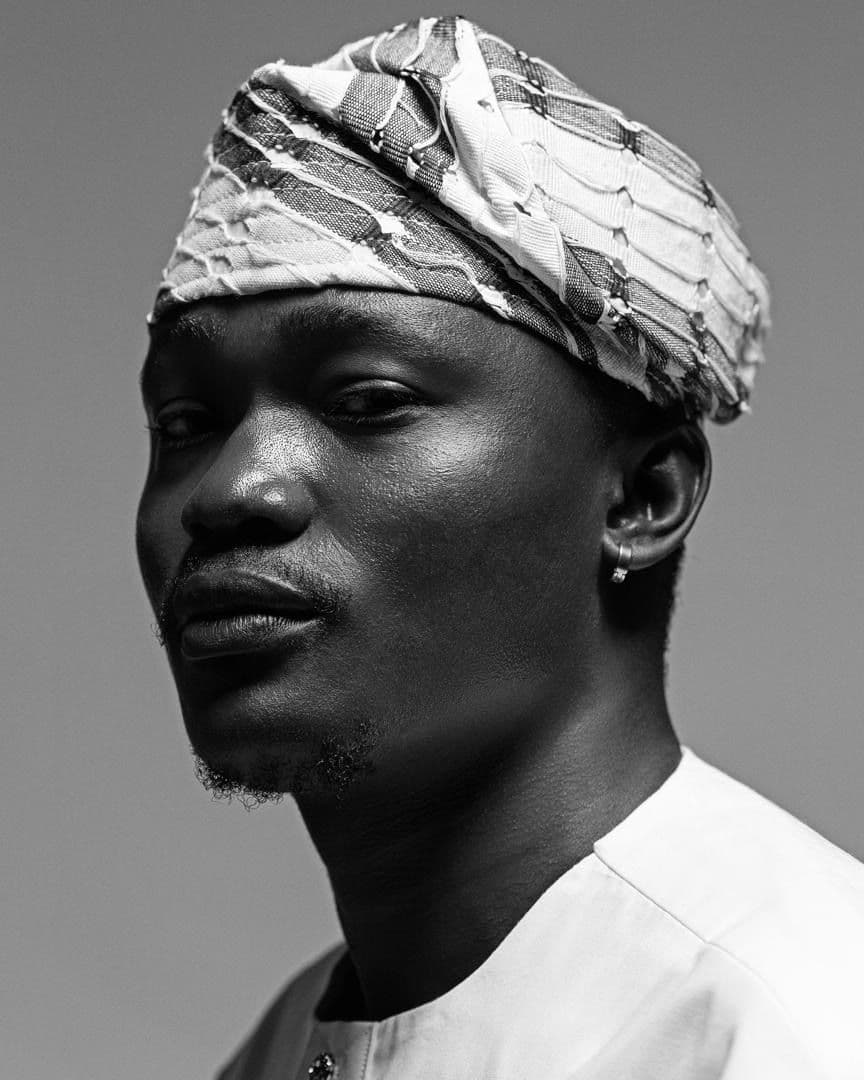
Multidisciplinary Artist
Nigeria
Photography, Weaving, Collage, Mixed Media & Installation

Emmanuel Agyapong
Author
Published on:
September 21, 2026
Ayobami Ogungbe is a Nigerian photographer and multidisciplinary artist whose practice brings photography into conversation with weaving, collage, and installation to examine memory, place, and cultural inheritance. Born in 1993 and based in Lagos, Ogungbe grew up in Badagry, a coastal town whose history and Ogu heritage have increasingly become central to his work. Rather than treating weaving as a decorative addition to photography, he incorporates it as a physical and cultural structure through which images of place can be reconsidered.
Ogungbe studied Mass Communication at the University of Benin, where his initial engagement with photography developed through an interest in photojournalism and documentary image-making. That foundation established photography as a way of observing the world around him, but his practice gradually moved away from simply recording what was visible. The shift became particularly pronounced during the pandemic, when he began reconsidering the relationship between photography, personal memory, and the place from which he came.

Ayobami Ogungbe, BY WAY OF WATER. Public Installation 30 feet by 18 feet by 11 feet. Courtesy of the Artist
Weaving became part of that reconsideration. Drawing from traditions associated with Badagry, Ogungbe began combining photographic images with woven materials, allowing the image to become physically constructed rather than simply printed onto a surface. The result changes the way photography functions within the work. An image can be fragmented, interrupted, layered, and reconstructed through another material, making memory itself feel less like a fixed record and more like something continually assembled.
This is significant because the weaving enters the work through lived cultural context. Ogungbe is not importing a craft vocabulary simply to alter the appearance of a photograph. The technique is connected to the environment and traditions of Badagry, making the transition from image to woven surface part of a larger return to place. Photography becomes a means of carrying memory, while weaving provides another way of physically holding it.
Badagry has consequently moved from being the location of Ogungbe’s upbringing to becoming an active subject of his practice. His recent work engages the town’s Ogu heritage and the historical consequences of colonial borders, bringing questions of identity and belonging into the photographic image. The history of the area is particularly complex, shaped by movement across the coast and by colonial systems that imposed political boundaries over existing communities and relationships.

Ayobami Ogungbe, A SONG FOR ALL SEASONS. Courtesy of the Artist
His attention to Badagry also changes the position of the artist within the work. Instead of approaching the community solely as a subject to be photographed, Ogungbe has increasingly worked with people whose knowledge and labour are part of the projects themselves. Recent collaborations with women weavers and fishermen have involved the use of water reed harvested from the local lagoon for community installations. The material therefore connects the finished work directly to the landscape and the people who inhabit it.
This development pushes his practice beyond representation toward participation. The lagoon is not simply photographed; its material resources become part of the work. The weavers are not merely pictured as custodians of a tradition; their knowledge contributes to how the work is made. And the history of Badagry is not presented as something fixed in the past, but as a condition that continues to shape contemporary life.
The community dimension has also introduced practical concerns into the artistic process. Ogungbe’s recent engagement with questions around infrastructure, including interest in access to clean drinking water, suggests a practice increasingly attentive to the relationship between cultural memory and material conditions. The work begins with photography and weaving but moves toward questions about what a community needs in order to sustain its history, its people, and its future.
His development can be traced through this expanding relationship between image and place. Earlier photographic work established an interest in documenting people and environments; Point of Return brought memory and Badagry more explicitly into focus; and his later woven photographic works make the relationship between cultural inheritance and material process visible. Brother’s Keeper (2021), from Point of Return, reflects this engagement with memory and place, while For The Love of God (2025), a woven photographic print on canvas, demonstrates how fully weaving has entered his visual language.
The work also found a wider international context in 2025. Rele presented Ogungbe in Process + Place in Los Angeles, an exhibition concerned with memory, architecture, and emotional relationships to place, and later presented his practice at 1-54 London. His work was also included in the 2025 LagosPhoto Biennial, where his woven photographic practice entered a broader conversation around migration, identity, confinement, and memory. These exhibitions position Badagry not as a peripheral reference but as an important source from which contemporary questions can be developed.
What makes Ogungbe’s practice increasingly distinctive is the way several forms of knowledge meet within it. Photography provides the image, weaving introduces inherited craft knowledge, and the landscape provides material. Community collaboration then changes the relationship between artist and subject. Each element complicates the others, preventing the work from settling into either documentary photography or craft.
Ogungbe’s practice ultimately suggests that remembering a place can involve more than photographing it. It can mean working with its materials, learning from its makers, revisiting its histories, and allowing those histories to alter the form of the image itself. In his work, Badagry is not simply something to be represented. It becomes something to be woven back together.