
Connect
© 2026 Kyekyekule Africa. All rights reserved.
kyekyekule.africa
© 2026 Kyekyekule Africa. All rights reserved.
kyekyekule.africa
Textile
Malawi
Hand-stitched silk collage tapestries.

Emmanuel Agyapong
Author
Published on:
June 18, 2026
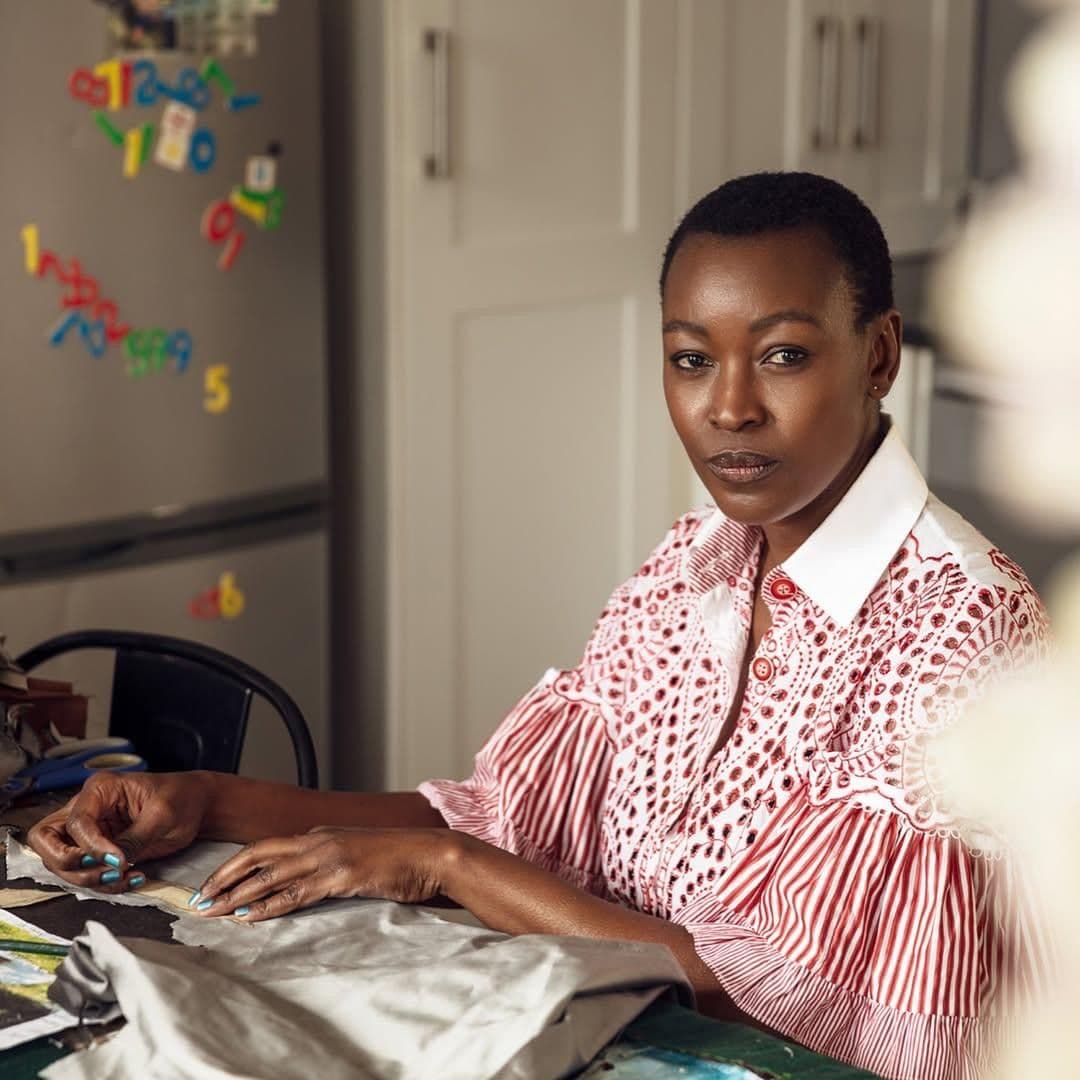
Billie Zangewa is a Malawian textile artist based in Johannesburg whose hand-stitched silk collages construct an autobiographical archive of Black femininity, domestic life, and motherhood. Working through scenes drawn from her own experiences, she places the ordinary details of daily life at the centre of the composition, treating care, intimacy, rest, labour, and family not as subjects outside the concerns of contemporary art but as places where questions of gender, race, and power are lived. Her practice locates the political within the everyday, where larger social structures become tangible through the specific conditions of a life.
The making of each work begins with research and photography before moving through line drawing into compositions assembled from layers of dupion silk offcuts. Zangewa cuts, arranges, and hand-stitches the fragments with sustained precision, allowing the labour of construction to remain embedded in the finished image. The process is slow and accumulative, with individual pieces of silk becoming part of a larger scene through repeated acts of placement and stitching. This method gives the work a relationship to time that is inseparable from its intimate subject matter.
Silk also carries a history that complicates its use within contemporary fine art. Associated with luxury, femininity, clothing, and decorative craft, the material occupies a space that has often been separated from the hierarchies of painting and sculpture. Zangewa brings those associations directly into the gallery, refusing the distinction between decorative and fine art through the scale, complexity, and conceptual weight of her tapestries. The material is therefore not simply a means of reproducing an image; its cultural history becomes part of what the image is able to say.

Photo Credit: Billie Zangewa
Her concept of “daily feminism” extends this material argument into the content of the work. Rather than locating feminism only within overt political imagery, Zangewa examines the spaces where gendered expectations are enacted repeatedly: the home, the body, relationships, caregiving, and the routines of family life. A domestic scene can therefore carry questions about autonomy and labour, while an image of motherhood can address the social expectations attached to women without reducing motherhood itself to a political symbol. The personal remains specific, but it also becomes a way of examining structures that shape many lives.
This specificity is particularly important in Zangewa’s treatment of the Black female body. Her figures are situated within their own environments and experiences rather than presented through the historical conventions of stereotype or objectification. Tenderness becomes a method of representation: the body is allowed to rest, move, care, inhabit space, and exist without being made available primarily for external consumption. The intimacy of the scenes shifts attention from how Black women have historically been pictured to how they might represent themselves through the details of lived experience.
Motherhood occupies a similar position within the practice. Zangewa’s work does not present being a mother and being an artist as mutually exclusive identities. Instead, the two exist within the same autobiographical field, allowing the realities of care, family, and artistic production to coexist without one being treated as an obstacle to the other. The work itself becomes evidence of that coexistence, challenging the expectation that artistic seriousness requires distance from domestic life.
Zangewa graduated from Rhodes University with a Fine Arts degree in 1995, establishing a formal foundation for a practice that has developed through a distinctive engagement with textile and autobiography. Her work is held in the National Museum of African Art at the Smithsonian Institution in Washington, while her selection as the featured artist at the 2018 FNB Joburg Art Fair extended her work into a broader international exhibition context. These milestones reflect the growing institutional presence of a practice that has remained closely tied to the specificity of its material and personal subject matter.
Across Zangewa’s tapestries, the domestic becomes a site of sustained observation rather than retreat from the world. Silk, stitching, and carefully constructed scenes give physical form to experiences that are often treated as private or ordinary, while the time invested in making each work reinforces their significance. Her practice ultimately unsettles the boundary between the personal and the political: what appears intimate and everyday can also contain questions of power, identity, labour, gender, and belonging, because those larger forces are lived precisely through the details of ordinary life.