
Connect
© 2026 Kyekyekule Africa. All rights reserved.
kyekyekule.africa
© 2026 Kyekyekule Africa. All rights reserved.
kyekyekule.africa
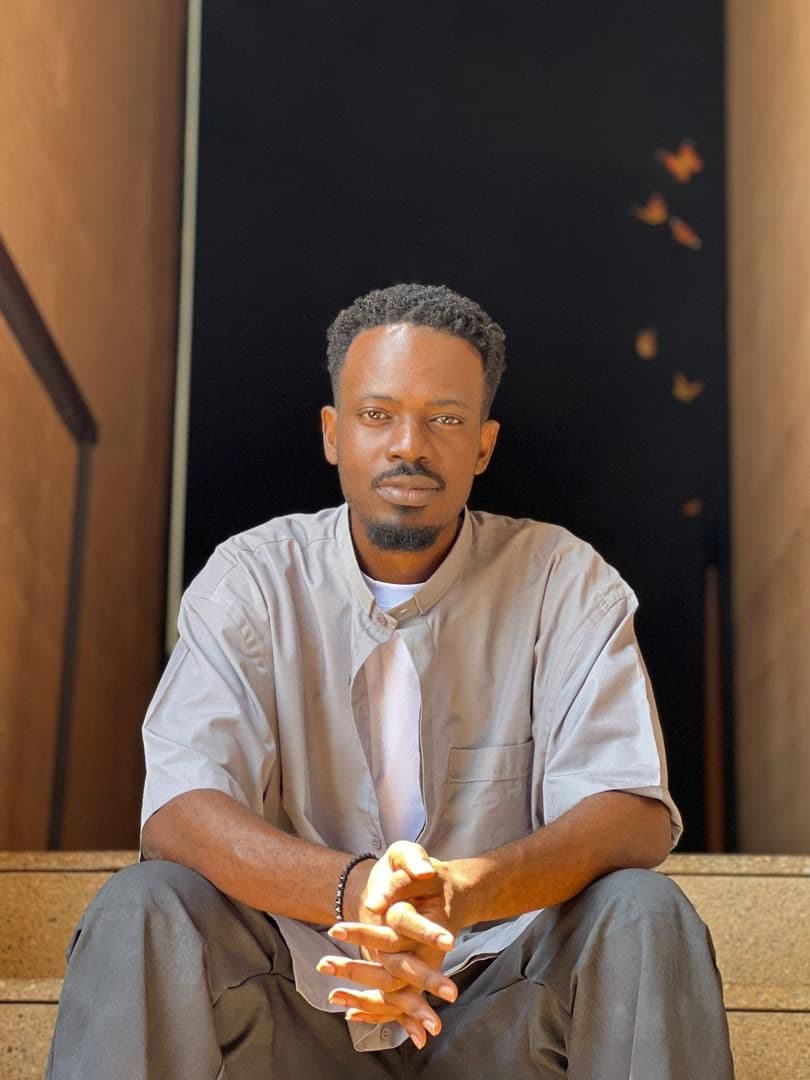
Artist & Researcher
Ghana
Bronze sculpture, Installation, Inner-tube weaving, Moving image, Drawing & Archival research

Emmanuel Agyapong
Author
Published on:
October 23, 2026
Dela Anyah Turns Ghana’s Tyre-Repair Shops Into Sites of Artistic Research
Discarded tyres carry the history of their use: the roads they travel, the vehicles they support and the labour required to keep them in circulation. For Ghanaian artist and researcher Dela Anyah, this material history extends beyond the tyre itself to the informal networks that determine how objects are repaired, reused and assigned value.
His practice examines the tyre-repair shop as both a working environment and a system of knowledge, bringing attention to the people, materials and economic relationships that sustain everyday life.
The Infrastructure Behind the Material

Dela Anyah, ‘ Homecoming’ Dome Site responsive installation. Courtesy of the Artist
Anyah’s work begins with an infrastructure that is familiar across Ghana but rarely considered a subject of sustained artistic inquiry. Vulcaniser shops occupy roadside spaces, neighbourhood junctions and stretches of busy urban roads. They provide an essential service, extending the lives of tyres and helping vehicles remain in circulation. Their operations depend on specialized skills, improvised equipment and practical knowledge acquired through experience.
These spaces also reveal how informal economies function. Repair work depends on the availability of materials, relationships with customers, access to roadside space and the ability to work within uncertain economic conditions. Anyah approaches this environment as more than a source of discarded material. He examines the systems of labour and exchange that give the material its social significance.
This distinction is central to his practice. Recycling can make waste useful again, but Anyah’s research asks what happens when the processes surrounding waste become the subject of the work itself. The tyre becomes a point of entry into questions about infrastructure, labour, resourcefulness and the uneven distribution of value.
The Vulcanizer as a Site of Research
Through Vulcaniser Atlas, Anyah investigates the networks of tyre-repair shops and the knowledge embedded in their operations. The project positions the vulcanizer as a figure whose expertise is integral to the functioning of the city, even when the conditions of that work remain overlooked.
Mapping and documentation provide ways to examine these relationships. Rather than treating the repair shop as a backdrop, Anyah directs attention towards its organisation, material processes and place within the urban economy. The shop becomes a site where the circulation of goods intersects with skilled labour and the practical demands of keeping infrastructure operational.
His wider research and writing extend this inquiry. Essays including Walls as Luxury: The Economics of Informal Repair Shops, Tire as Roadside Ornament and The Vulcanizer Shop: Materiality, Precarity, and Informal Repair Infrastructures examine the relationships between informal work, material culture and the built environment. Together, these investigations situate his artistic practice within a broader consideration of how cities function through systems that often remain outside formal planning and institutional recognition.
Beyond Recycling

Dela Anyah, ‘OBALOLUWA (2023)’ Spray paint, fabric dye, acrylic paint on paper, jute sacks, rubber inner tubes, PPR pipe 78.5 × 80.5 in. Courtesy of the Artist
Tyre rubber and inner tubes recur throughout Anyah’s practice, appearing in sculpture, installation, moving image and textile-like constructions. He also works across materials and forms that include bronze and works on paper. These shifts allow him to examine how a material changes meaning as it moves between use, repair, disposal and artistic presentation.
Inner tubes, for instance, belong to a practical system designed to maintain movement. Once removed from that system, they carry evidence of wear and use while retaining the physical properties that made them useful. In an artwork, this material history does not disappear. It becomes part of the encounter between the object and the viewer.
Anyah’s approach therefore differs from a straightforward transformation of waste into art. The material is not simply rescued from disposal or given a new aesthetic function. It retains its connection to labour and infrastructure, directing attention towards the economic and social conditions that shaped it before entering the studio.
The work also complicates the distinction between formal and informal systems of production. The repair shop relies on knowledge, adaptation and repeated acts of making, although these activities may not receive the same recognition as work conducted within established industrial or institutional settings. By bringing this knowledge into artistic research, Anyah asks how value is produced, and whose expertise is acknowledged in the process.
When the Repair Shop Becomes an Exhibition Space
Anyah’s engagement with repair infrastructure also extends beyond the studio. Projects associated with his Homecoming series, including Homecoming Madina Estates, Homecoming Dome and EDOTOM 1, bring his practice into dialogue with specific urban environments. Other works, including Forgotten Futures and Portrait of a Vulcaniser as Signage, further indicate his interest in how public space, local economies and visual culture intersect.
These interventions are important because they shift the conditions under which the work is encountered. In a gallery, a material can be isolated, illuminated and interpreted as an artwork. Within the environment from which it emerges, it remains connected to the activities, relationships and routines of everyday life.
The repair shop consequently becomes more than a location represented by the artist. It can function as a setting for artistic inquiry in its own right, where the distinction between observation and participation becomes less straightforward. The question is not only what an artist can make from a tyre, but what sustained attention to the people who repair and reuse it can reveal about the city.
This approach also places pressure on conventional ideas of where artistic knowledge originates. The workshop, roadside and neighbourhood become places in which expertise is produced and transmitted, even when that knowledge is not formally documented. Anyah’s practice draws these spaces into wider conversations about contemporary art without detaching them from their material and social circumstances.
From Local Research to the 2026 Dakar Biennale
Anyah’s selection for the 2026 edition of the Dakar Biennale places his practice within an international exhibition context at a moment when his research into informal infrastructure continues to develop. The selection is significant not simply as a career milestone, but because it brings work grounded in Ghana’s everyday material and economic systems into a wider conversation about contemporary artistic practice.
His work offers a way to consider how local systems of repair, reuse and exchange can support questions that extend beyond a single city. The informal repair shop is specific to its social and economic setting, yet the issues it raises—how labour is valued, how resources remain in circulation and how overlooked forms of knowledge sustain urban life, have wider relevance.
The Biennale provides a context in which these questions can encounter other artistic approaches and institutional frameworks. It also places Anyah’s research within a broader international discussion without requiring the specificity of his subject to be reduced to a general statement about sustainability or African urbanism.
What remains important is the method behind the work: sustained attention to the systems that organise daily life, and an insistence that their material traces can reveal histories and relationships that more visible forms of infrastructure leave out.
What the Material Leaves Behind
Anyah’s practice asks viewers to look beyond the discarded tyre and consider the network of activity that surrounds it. Repair, reuse and disposal are not isolated stages in an object’s life; they are connected processes shaped by labour, knowledge, economic necessity and the organization of urban space.
By treating tyre-repair infrastructure as a subject of artistic research, Anyah shifts attention from the appearance of waste to the systems that produce and manage it. His work makes the roadside workshop legible as a place of expertise and cultural production, while retaining the uncertainties and inequalities that shape its operation.
The tyre remains a functional object, a material resource and a record of use. In Anyah’s hands, it also becomes a means of examining the often-unrecognised work through which a city continues to move.