
Connect
© 2026 Kyekyekule Africa. All rights reserved.
kyekyekule.africa
© 2026 Kyekyekule Africa. All rights reserved.
kyekyekule.africa
Multidisciplinary Visual Artist
Ghana
Archival photographs, textiles, canvas, fabric, found objects, digital collage, transferred photographic images

Emmanuel Agyapong
Author
Published on:
September 7, 2026
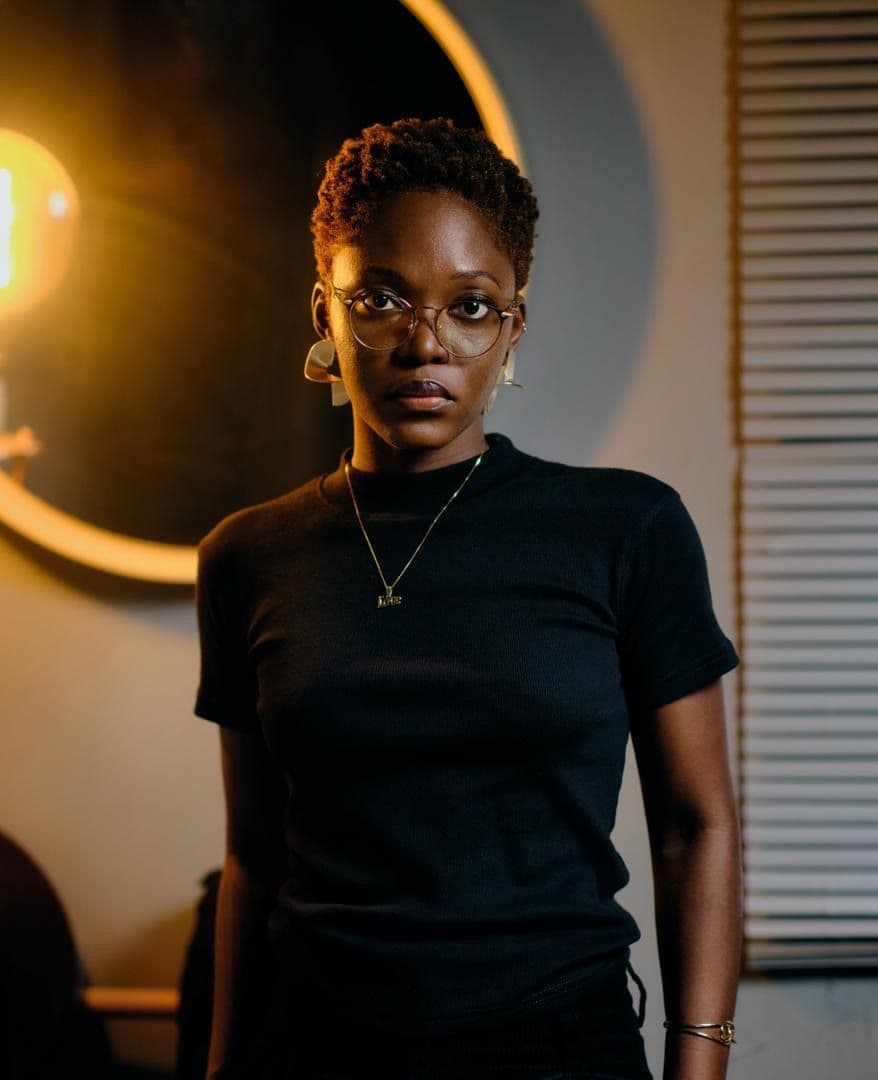
Denyse Gawu Mensah is a Ghanaian multidisciplinary artist based in Accra whose practice, moving across collage, installation, digital composition, photographic image transfer, and textile-based work, is increasingly concerned with one of the most intimate and consequential questions contemporary art can ask of history: what happens when a private family archive begins to reveal the shape of a collective past? Drawing from photographs connected to Ghana’s post-independence decades, particularly the 1960s and 1970s, Gawu Mensah transforms inherited images into layered material compositions in which personal memory and national history become impossible to separate cleanly from one another, each photograph carrying not only the identity of the person pictured but also the visual evidence of a society, a generation, and a historical moment that continues to live beyond the frame.
The archive in her work is therefore never treated as a neutral repository of facts or as a source of nostalgia waiting to be aesthetically revived. It is unstable material, physically transferred, fragmented, layered, and reconstructed, its imperfections becoming part of the meaning of the work itself. What survives in a photograph is never everything that happened, and Gawu Mensah’s practice operates precisely inside that distance between what the image preserves and everything time has allowed to disappear.
Her recent engagement with family photographs is particularly significant because of the scale at which private memory begins to become public history. Working with an extensive collection of portraits from her grandfather’s family albums, she has assembled hundreds of photographic images into large textile compositions that transform the family archive into something far larger than the story of a single household. Faces that may once have existed only within the intimate circulation of relatives and descendants begin to form a wider visual record of Ghanaian life, carrying evidence of clothing, gesture, social aspiration, work, family structures, and the everyday ways people presented themselves during the decades following independence.
This is the central intellectual force of her practice: history does not survive only in monuments, government documents, and institutional collections. It also survives in the photographs people kept in drawers, albums, boxes, and family homes, and those private records can contain forms of knowledge about a society that official archives have never been designed to preserve.
The physical processes through which Gawu Mensah works deepen that argument. Her movement through digital collage and photographic composition into image transfer and textile-based construction takes photography away from its conventional position as a smooth and supposedly stable record of reality and gives it a new material life. Images are transferred onto surfaces, manually layered, and brought into conversation with fabric and textile structures that make memory feel handled, accumulated, and physically carried. The imperfections that emerge through these processes are not failures to achieve photographic clarity but evidence of time and transformation. Memory, her work suggests, does not arrive intact. It is inherited in fragments, altered by repetition, damaged by absence, and reconstructed differently by every generation that receives it.
This material evolution is one of the most compelling aspects of her development as an artist. Earlier work such as Unseen: An Imaginative Prediction of the Future from 2020 demonstrated an engagement with digital photomontage and speculative image-making, constructing visual possibilities through the manipulation of photographic material and light. Her more recent practice has moved increasingly toward the physical archive, toward images that already possess histories before she begins working with them, and toward materials capable of giving those histories weight. The progression from digital photomontage to found imagery, photographic archives, manual transfer, and textile construction is not simply a shift in technique but a deepening inquiry into how memory moves through time — how an image changes when it is taken from one context and placed into another, and what becomes possible when the photograph is no longer treated as an endpoint but as the beginning of a new visual conversation.

Denyse Gawu Mensah, “Kobla On Duty,” 2024 Photo transfer on sac linen, 50 × 50 cm. Courtesy of the Artist
Kobla On Duty from 2024 offers a particularly clear example of this developing direction. Created through photographic transfer on sac linen and drawing from mid-twentieth-century Ghanaian family imagery, the work brings the private archive into direct contact with the wider historical imagination of the nation. Its presentation at Frieze Seoul in 2025 marked an important expansion of the contexts in which her work could be encountered, placing a practice rooted in Ghanaian family memory within an international conversation about historical residue, identity, and contemporary African experience. Yet the international movement of the work does not dilute the specificity of its source. If anything, it confirms the capacity of a deeply local archive to speak beyond itself without surrendering the conditions from which it emerged.
Gawu Mensah’s development has also been shaped by the experimental artistic environment from which she emerged. Educated in Communication Design at the Kwame Nkrumah University of Science and Technology, she became part of Asafo Black, a collective formed by artists emerging from KNUST’s College of Art and shaped by an approach to practice that embraced experimentation, self-initiated exhibition making, popular culture, material exploration, and alternative forms of artistic dissemination. The collective’s engagement with hip-hop, club culture, commodities, religious iconography, and unconventional spatial interventions created an environment in which the boundaries between disciplines were never treated as fixed. Her participation in the 2020 Stellenbosch Triennale, within this wider context of collective experimentation, forms an important part of understanding the freedom with which her practice now moves between media.
That history matters because Gawu Mensah’s archival work did not appear suddenly as a departure from her earlier practice. The willingness to move between digital composition, photography, textiles, collage, and installation is rooted in an artistic formation that understood experimentation as a method rather than an exception. What has changed is the increasing precision of the questions those materials are being asked to carry. The archive has become the site through which her earlier interests in image construction, fragmentation, and visual storytelling have found a deeper historical and emotional urgency.
Winning the fourth edition of the Yaa Asantewaa Art Prize in 2024 marked another important moment in this trajectory. The recognition, residency, and subsequent opportunity for a solo exhibition provided a significant platform for a practice moving with increasing clarity toward research-based explorations of memory and history. Her inaugural solo exhibition at Gallery 1957, LIGHTYEARS OF US, opened in Accra in October 2025 and extended into 2026, bringing together the concerns that have become central to her recent work: family photographs, intergenerational memory, distance, absence, and the possibility that the images inherited from previous generations might still contain histories waiting to be understood.
The title LIGHTYEARS OF US captures something fundamental about the distance Gawu Mensah’s work is attempting to cross. A photograph can make the past appear immediately present, but the people inside it remain separated from us by time, experience, and everything that happened after the shutter closed. We can see their faces without fully knowing what they thought. We can recognise the details of their lives without recovering the world as they understood it. Her practice does not attempt to erase that distance. Instead, it makes the distance itself visible, treating the gap between generations as a space of inquiry rather than a problem that art must solve.
What makes Denyse Gawu Mensah’s work increasingly important is its refusal to separate the personal from the historical. A family photograph is never only a family photograph once we begin to ask what else it contains. It can reveal a way of dressing, a relationship to modernity, an aspiration, an institution, a social structure, or a particular moment in the visual development of a nation. When hundreds of such images are brought together, the archive begins to exceed the people who originally assembled it. Private memory becomes collective testimony.
Her work asks us to reconsider where history lives and who has the authority to preserve it. The official archive has traditionally determined which images are important enough to be kept, catalogued, and remembered. Gawu Mensah’s practice opens another possibility: that the photographs considered ordinary by the families who inherited them may contain equally important records of how a society understood itself. The people in these images did not necessarily imagine themselves as historical subjects. Yet time has made them so.
What her practice continues to construct, across every transferred photograph, textile fragment, and layered composition, is the argument that memory is not something we simply receive intact from the past. It is something we actively reconstruct from what remains. And in the hands of an artist attentive enough to the histories contained within an ordinary photograph, a family album can become more than a collection of memories — it can become a national archive, revealing that the history of a people has always been living in places we were not yet looking closely enough to see.