
Connect
© 2026 Kyekyekule Africa. All rights reserved.
kyekyekule.africa
© 2026 Kyekyekule Africa. All rights reserved.
kyekyekule.africa
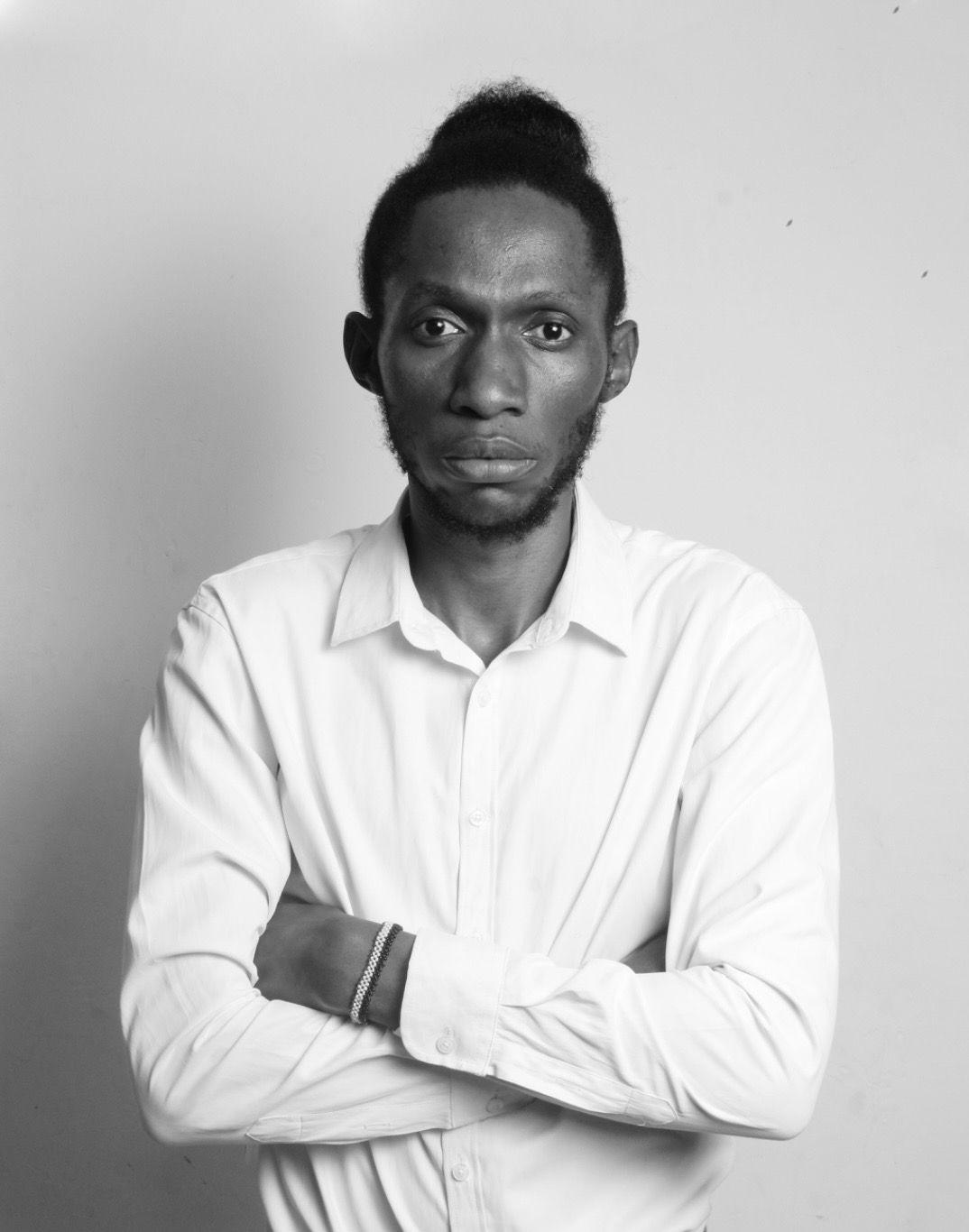
Pen Artist
Uganda
Ballpoint Pen & Acrylic on paper

Emmanuel Agyapong
Author
Published on:
November 9, 2026
Ugandan contemporary artist Gayi Eric Joe uses detailed ballpoint pen drawings to examine Black identity, cultural memory and the pressures of social conformity. Working primarily on paper, he builds portraits through thousands of carefully layered marks, turning an everyday drawing tool into a means of sustained reflection on identity, visibility and resistance.
Born in Kampala and based in Entebbe, Joe approaches drawing as a slow, repetitive process. Hatching and the accumulation of fine lines create dense surfaces that demand time and concentration. The ballpoint pen, an accessible and familiar instrument, becomes central to this approach: its ordinary character contrasts with the discipline required to construct each image. Repetition is not simply a technical method but a way of registering endurance, allowing the act of drawing to carry some of the weight of the experiences the work addresses.
Breaking the Norms: Afro Hair as Identity and Resistance

Installation on View: Eric Joe Gayi: “Breaking the Norms” (Solo Exhibition). Image credit: Ethel Aanyu. Courtesy of Amasaka Gallery and the artist.
Joe’s debut solo exhibition, Breaking the Norms, marks a significant development in his exploration of Black identity through Afro hair. The series considers hair as more than a question of personal appearance. It becomes a site where cultural inheritance, self-expression and social expectations meet, revealing how professional and public environments can impose conditions on the ways Black people present themselves.
The series draws directly from Joe’s experience of being denied a job because of his hair. He recalls being perceived as irresponsible because he wore his natural Afro. That encounter brought into focus the assumptions attached to Black hairstyles and the extent to which acceptance can depend on proximity to Eurocentric standards of appearance. His response is to make the politics of hair visible, treating the freedom to wear it naturally as a question of dignity and self-determination.
Rendered predominantly in deep blues and blacks, the portraits develop a visual language around these tensions. Joe places figures against subtle, honeycomb-like structures that suggest containment, pressure and resilience. The compositions hold the individual between personal choice and the social systems that attempt to regulate it.
The Same Hair, Different Expectations

Eric Joe Gayi, Interlocked Origin, ballpoint pen and acrylic on paper. Courtesy of the artist.
Across the works in Breaking the Norms, Joe questions why certain hairstyles are treated as more acceptable than others, even when they share the same origin. His drawings challenge the distinctions imposed between an Afro, twists, cornrows and dreadlocks, asking why one form might be considered professional or presentable while another attracts judgement.
In Interlocked Origin, made with ballpoint pen and acrylic on paper, this question becomes a reflection on the assumptions surrounding natural hair. Joe draws attention to the contradiction of accepting one hairstyle while rejecting another, despite both growing from the same head. The work insists that changing the form of one’s hair should not determine the value or acceptability assigned to the person wearing it.

Eric Joe Gayi, Is This Freedom!, 87 × 120 cm, ballpoint pen on paper. Image credit: Courtesy of the artist.
This concern also shapes Is This Freedom!, an 87 × 120 cm ballpoint pen drawing that considers the relationship between self-judgement and external rules. Its central tension lies between the person one understands oneself to be and the version of that person society expects to see. The work suggests that conformity can operate without visible force: restrictions become internalized, shaping how individuals assess their own choices.

Eric Joe Gayi, Together as One, ballpoint pen on paper. Image credit: Courtesy of the artist.
In Together as One, Joe places his figures on tiptoes, introducing a sense of physical strain. He describes this tension as the weight carried in the struggle to become who we want to be. The body becomes a measure of that effort, holding the pressure of a negotiation between individual identity and collective expectations.
Drawing as a Form of Reclamation
Joe’s work moves between personal testimony and broader histories of representation. His experience of discrimination gives the series its point of departure, but the drawings extend beyond autobiography to examine the lasting influence of colonial legacies and Eurocentric beauty standards. The figures are both individual presences and representations of people negotiating the demands placed on Black appearance.
In his visual language, blue bodies represent those who alter their hair in pursuit of acceptance, while black figures marked by surreal honeycomb patterns represent those who retain natural hairstyles and encounter discomfort or rejection. These distinctions give form to the psychological consequences of being asked to modify one’s appearance in order to belong.
Drawing becomes a way to reclaim the terms through which Black identity is represented. Rather than treating Afro hair as a detail of portraiture, Joe places it at the centre of a conversation about heritage, choice and the authority to define oneself. His work asks what it means to be accepted when acceptance is conditional on changing something that is already part of who you are.
Recognition and an Expanding Practice

Eric Joe Gayi, The Pull, 49 × 90 cm, ballpoint pen and acrylic on paper. Shortlisted for the 2026 Sovereign African Art Prize. Image credit: Courtesy of the artist.
Joe’s practice has received international recognition, including the Absa L’Atelier Award in 2023 and the BIC Art Master of Africa Award in 2021. He has participated in group exhibitions across Africa, while his work is held in private and institutional collections.
His drawing The Pull, measuring 49 × 90 cm and made with ballpoint pen and acrylic on paper, was shortlisted for the Sovereign African Art Prize 2026. The recognition places his work within a wider contemporary African art conversation, while the concerns driving his practice remain grounded in the specific social experiences from which the drawings emerge.
Beyond the studio, Joe uses his platform to contribute to discussions around race, beauty, identity and power. This engagement extends the questions in his work into public conversation, connecting the intimate experience of choosing how to wear one’s hair to the wider structures that determine whose appearance is considered acceptable.
At the centre of Joe’s practice is a question of who gets to establish the terms of belonging. His drawings make visible the pressures that shape Black self-presentation, while their painstaking construction insists on the time, attention and complexity that such questions deserve.
Breaking the Norms does not present identity as something that needs to be corrected or made acceptable. Instead, it places the burden of scrutiny on the standards themselves. If different hairstyles emerge from the same natural inheritance, why should one require justification while another is accepted without question?