
Connect
© 2026 Kyekyekule Africa. All rights reserved.
kyekyekule.africa
© 2026 Kyekyekule Africa. All rights reserved.
kyekyekule.africa
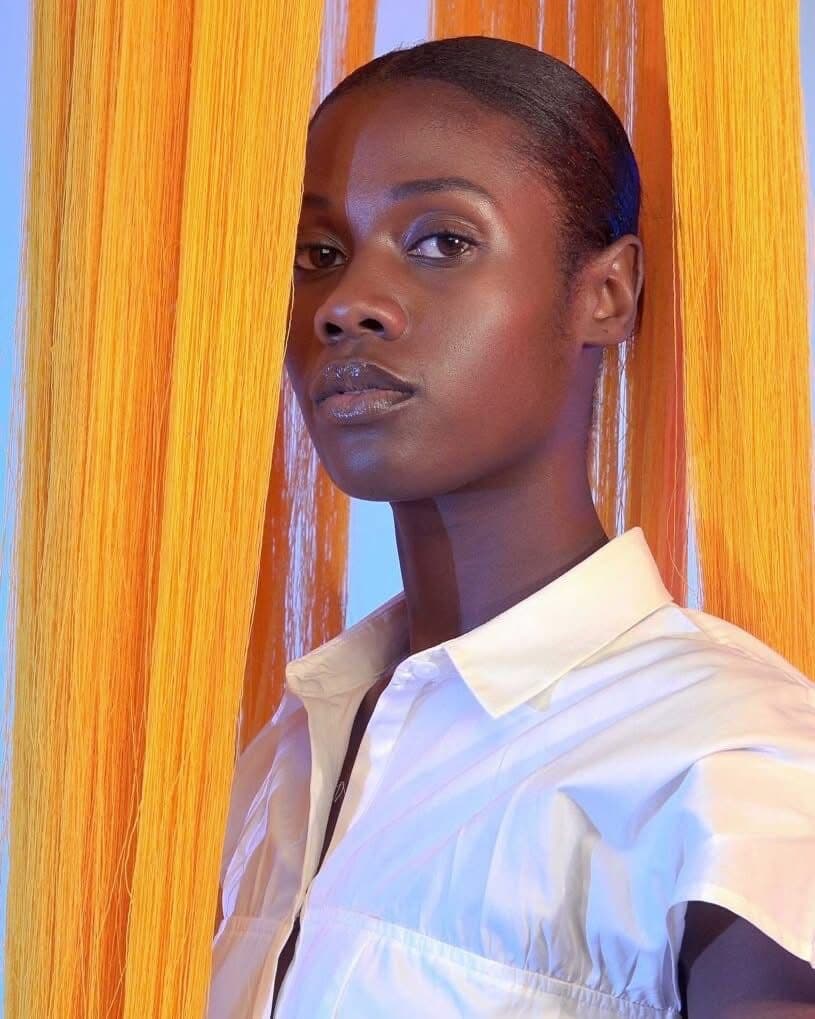
Multidisciplinary Artist
Ghana
Painting, Sculpture, Tapestry, & Installation

Emmanuel Agyapong
Author
Published on:
October 12, 2026
Na Chainkua Reindorf Builds Mythologies to Imagine Other Forms of Freedom
An Imagined World With Its Own Rules
Ghanaian artist Na Chainkua Reindorf builds fictional worlds through painting, tapestry, sculpture and installation, drawing on West African folktales, Vodún religion and Greek mythology to examine identity, gender and self-expression.
At the centre of her practice is an evolving mythology populated by seven supernatural beings she calls “skins.” These figures are more than recurring characters: they provide a framework through which she considers how people might exist beyond the expectations and restrictions imposed on them.
Reindorf’s world-building offers a way to approach social questions without illustrating them literally. Her figures inhabit an imaginative space where identity can be performed, transformed and redefined. Rather than treating mythology as a closed system of inherited stories, she uses it as a structure through which new possibilities can emerge.
The distinction is important. Her work does not simply borrow from existing traditions to create an unfamiliar visual language. It builds relationships between myth, material and contemporary experience, allowing invented beings to address questions that remain unresolved in the world outside the artwork.
The Seven “Skins”
The seven “skins” give Reindorf’s practice a sense of continuity. Each figure belongs to a larger fictional world, allowing individual paintings and objects to function as parts of an expanding visual narrative rather than as isolated works. Through their distinct identities and appearances, the figures create a vocabulary for examining self-expression and the limits placed on it.
This approach shifts the emphasis from representing a recognisable person to constructing a being whose identity is governed by the logic of an invented world. The figures can carry social meanings without being confined to direct allegory. Their supernatural character creates room for ambiguity, contradiction and transformation.
Gender is an important dimension of this framework. Reindorf’s practice considers the restrictions placed on women and the possibilities that emerge when identity is imagined outside established social expectations. The fictional world becomes a space in which those expectations can be rearranged rather than simply reproduced.
World-building, in this sense, is not an escape from reality. It is a method of examining how reality is organised, including who is permitted to express themselves freely and what forms that expression can take. By creating beings that operate according to their own visual and narrative logic, Reindorf makes room for identities that do not have to conform to familiar categories.
Mythology Without a Single Origin

Na chainkua reindorf, Na chainkua reindorf, “Bomi: Second Life”. cotton, satin, glass beads, cauris, cotton thread, plaster and polyester fibers. Courtesy of the Artist
Reindorf draws on West African folktales, Vodún religion and Greek mythology. These sources bring different histories, cosmologies and understandings of the supernatural into her practice. Their presence places her work within a broader artistic question: how can inherited mythologies be engaged, reworked and placed in conversation without erasing the distinctions between them?
Myth provides a means of thinking through experiences that may resist straightforward description. It can hold contradictions, explain relationships and create figures through which social rules become visible. Reindorf extends these possibilities by developing her own mythology rather than relying on a single established narrative to organize the work.
Her approach also complicates the boundary between inherited tradition and contemporary invention. The work draws from existing cultural references, but the resulting world belongs to an ongoing artistic process. Its figures and relationships develop through her decisions about form, character, material and narrative.
This does not make the traditions she references interchangeable. Their distinct contexts remain important to understanding the work. The more productive question is how Reindorf brings these sources into her own visual system, and what becomes possible when mythology functions as a living method of artistic inquiry rather than a fixed repository of symbols.
From Masquerade to Contemporary Art
Masquerade provides another important context for Reindorf’s practice. Her project Shrine: At the Intersection of Object and Spectacle (2019) draws on Ghana’s Fancy Dress festival in Winneba, engaging with the costumes, objects and visual elements associated with masquerade traditions.
Masquerade brings together costume, movement, public display and transformation. Materials that might otherwise remain ordinary become part of a constructed identity, while the body becomes the site through which that identity is performed. Colour, texture, ornament and scale contribute to the spectacle, but the objects also depend on the labour and knowledge involved in making them.

Shrine Gallery View. Courtesy of the Artist
In Shrine, Reindorf examines this relationship between object and performance through textile-based work. Cotton yarn, nylon thread and hand-polished glass beads become part of a material investigation into how elaborate forms are constructed and how objects acquire meaning through their use and presentation.
The project provides a connection between her engagement with masquerade and her wider interest in the “skins.” Both involve constructed identities and the transformation of materials into forms that exceed their everyday functions.
Yet masquerade also has its own social and cultural contexts, which should not be reduced to a metaphor for individual self-expression. Its relevance lies partly in the relationship between making, performance and collective life.
When Materials Become Part of the Myth
Reindorf’s world-building extends beyond the figures she paints. Fabric, beads, raffia, dyed threads and other mixed-media materials give her imagined world a physical presence. These materials introduce differences in texture, weight, transparency and surface, making the construction of the work part of its meaning.

Na Chainkua Reindorf, “Tokpe: Friends Today” 48.75 x 68.75 inches 2022 Acrylic gouache and fabric on linen. Courtesy of the Artist
Her paintings combine acrylic gouache and fabric, bringing textile elements into compositions traditionally associated with painting. In Tokpe: Friends Today (2022), fabric and acrylic gouache on linen form part of the material structure. Peli: Try and See (2021–2022) uses a similar combination, while Nyeti: Showing Teeth (2023) and Gedu: Awakening (2023) bring acrylic gouache and fabric together with pouring medium on clayboard.

Na chainkua reindorf, “Peli: Try and See” 48.75 x 68.75 inches 2021-2022 Acrylic gouache and fabric on linen. Courtesy of the Artist
Across these works, the materials do not simply support an image. They complicate the distinction between painted surface and assembled object, introducing physical layers into the representation of the “skins.” The figures belong to a fictional world, but the materials through which they appear insist on the tangible process of making.
This relationship between image and object is central to Reindorf’s practice. The mythology may be invented, but its presence depends on material decisions: what is attached, layered, embellished or allowed to remain visible. The world becomes credible not because it imitates an existing reality, but because the artist gives it its own material logic.
Veil: Building a Physical Encounter

Na Chainkua Reindorf, “Veil” 216 x 180 in 2022 Glass beads, plastic beads, polycarbonate sheet, fibreglass resin, astroturf, steel cable Photographer Ghana Pavilion, Arsenale, Venice Biennale 2022. Venice, Italy. Photograph by David Levene 21/04/22.
Reindorf’s installation Veil (2022), presented in the context of Ghana’s pavilion at the 59th Venice Biennale, extends this relationship between constructed identity and material form into architectural space. The large-scale work combines glass and plastic beads, polycarbonate sheet, fibreglass resin, astroturf and steel cable. Its scale shifts the encounter from looking at a single image to confronting an arrangement of materials within a physical environment.
The title introduces the idea of a boundary: something that conceals, separates or mediates what can be seen. The work’s range of materials complicates any simple distinction between transparency and opacity, natural and synthetic, ornament and structure. Its presence invites consideration of how a surface can regulate access, shape perception or create an interval between a viewer and what lies beyond.
These possibilities connect the installation to Reindorf’s broader concerns with identity and transformation. Just as her “skins” inhabit an invented world, the installation constructs a physical situation in which the relationship between viewer, material and space becomes part of the work.
Reindorf’s participation in Black Star: The Museum as Freedom, Ghana’s pavilion at the 2022 Venice Biennale, marked a significant point in the international presentation of her practice. Within that context, Veil offered a way to consider how an artist’s invented visual language can operate at a scale beyond the individual painting or textile object.
Gender, Ritual and the Possibility of Freedom
Reindorf’s interest in gender and self-expression runs through her world-building, her engagement with masquerade and her use of constructed forms. Her invented beings offer alternatives to the social roles that often determine how bodies are seen and interpreted. Their supernatural identities create room for transformation, allowing the work to consider freedom as something that must be imagined as well as pursued.
Ritual and masquerade introduce further complexity because they involve identities shaped through shared practices, objects and forms of display. They suggest that identity is not solely an internal or individual matter; it is also produced through relationships between bodies, materials, audiences and cultural systems.
Reindorf’s practice brings these questions into contemporary art without requiring every figure or object to stand for a single social issue. The fictional world can hold several meanings at once. Its forms may draw attention to gendered restrictions while also raising questions about how people construct identities, negotiate belonging and make themselves visible.
The work’s imaginative dimension is therefore central to its critical potential. Instead of offering a fixed model of liberation, Reindorf creates a world in which the terms of identity can be reconsidered. The freedom she explores is not presented as a completed state, but as a possibility that takes shape through invention, performance and transformation.
An Expanding Practice
Reindorf completed a BA in Studio Art at Grinnell College in 2014 and an MFA in Creative Visual Arts at Cornell University in 2017. Her exhibition history includes Up To No Good at Nubuke Foundation in Accra in 2022, Strange Flesh at Galerie Cécile Fakhoury in Dakar in 2024 and Mawu Nyonu at Anthony Brunelli Fine Arts in 2024. In 2025, she participated in The Writing’s on the Wall at the Savannah Centre for Contemporary Art in Tamale and The Alchemy of Color and Matter in Accra.
These exhibitions provide different contexts for encountering a practice that moves between painting, textile, sculpture and installation. They also demonstrate the continued development of an artistic language that does not depend on a single medium. The “skins” offer continuity, while changes in scale and material allow the world around them to expand.
Her participation in Ghana’s Venice Biennale pavilion brought this practice into an international exhibition context, but the significance of her work extends beyond that milestone. The central project remains the construction of an alternative visual world through which familiar questions about identity, gender and freedom can be approached from unfamiliar positions.
What an Invented World Makes Possible
Reindorf’s practice begins with the premise that an imagined world can be a way of thinking through the real one. Her seven “skins,” her engagement with masquerade and her combination of painting with textile and sculptural materials create a visual language in which identity is constructed rather than simply assigned.
Mythology provides a framework, materials give it physical form, and installation allows it to occupy space. Across these elements, Reindorf examines how people become visible, how identities are shaped by social expectations and how those expectations might be challenged through invention.
The work does not resolve these questions by presenting a single alternative. Instead, it builds a world in which other possibilities can be tested. What matters is not only who the “skins” are, but what their existence allows Reindorf to imagine beyond the rules that govern the world they inhabit.