
Connect
© 2026 Kyekyekule Africa. All rights reserved.
kyekyekule.africa
© 2026 Kyekyekule Africa. All rights reserved.
kyekyekule.africa
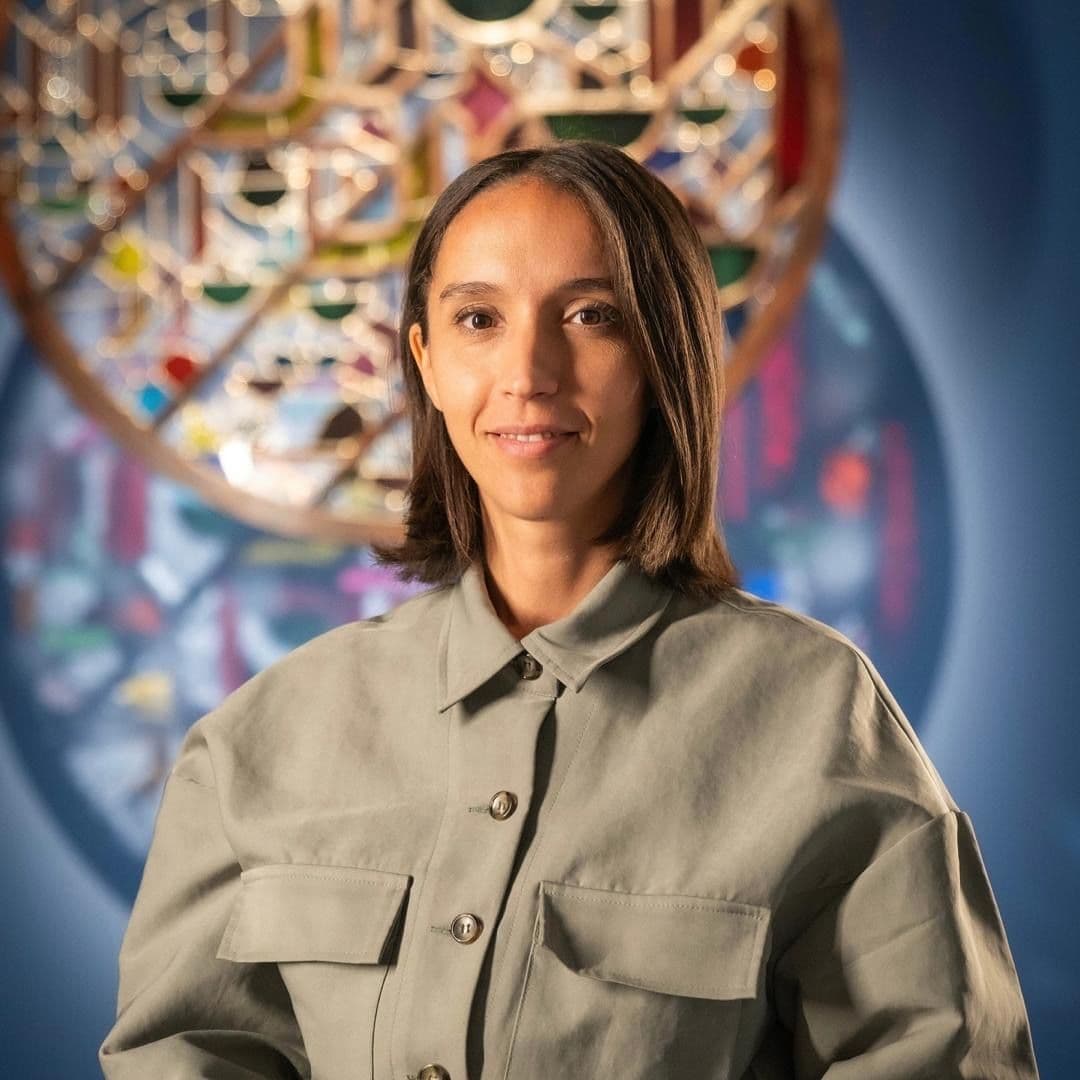
Multidisciplinary Artist
Morocco
Installation, Sculpture, Ceramics, Textiles, Embroidery & Glass

Emmanuel Agyapong
Author
Published on:
September 23, 2026
Sara Ouhaddou is a Franco-Moroccan artist whose practice begins with a question of how knowledge moves between people, materials, and generations. Working across installation, sculpture, ceramics, drawing, textile, embroidery, glass, and photography, she develops projects through sustained collaboration with Moroccan craftspeople and communities, treating craft not as a visual vocabulary to be extracted, but as a living system of knowledge shaped by labour, place, and transmission.
This approach is rooted in a practice that emerged from design. Trained in industrial design at École Olivier de Serres / ENSAAMA in Paris, Ouhaddou spent approximately a decade working within the luxury design industry before moving to Morocco in 2013. The shift brought her into closer contact with traditional craft practices and the economic and social conditions surrounding them. Rather than abandoning design, however, she carries its attention to material, process, function, and production into a contemporary art practice that asks how these systems might be reconfigured through collaboration.
Collaboration is therefore not simply a method of production in Ouhaddou’s work. It is part of the work’s conceptual structure. Her projects are developed with artisans, allowing traditional techniques to encounter new materials, forms, and contexts without separating the finished object from the knowledge embedded in its making. This creates a different relationship between contemporary art and craft: instead of positioning craft as heritage to be preserved or imagery to be borrowed, Ouhaddou considers what can emerge when the people who carry that knowledge are active participants in its transformation.

Photo Credit: Courtesy of the Artist
Her Woven / Unwoven works make this relationship visible through the tension between traditional processes and unfamiliar materials. Woven / Unwoven #11 (2018), held in the Centre Pompidou collection, uses embroidery on rubber across a three-dimensional form measuring 77 × 257 cm. The combination places a technique associated with textile traditions against an industrial material, making the encounter between different systems of production part of the physical structure of the work. The result is not a reconstruction of tradition, but a negotiation between what is inherited and what can still be made from it.
That negotiation also extends to the question of cultural memory. Ouhaddou’s practice moves between France and Morocco, and this geographical position informs an understanding of culture as something continually translated rather than fixed in one place. Her works can carry histories of Moroccan craft while entering contemporary institutional spaces far removed from the communities in which particular techniques originate. The movement between these contexts raises questions about who carries cultural knowledge, who is permitted to transform it, and what happens when forms of knowledge traditionally transmitted through making enter the language of contemporary art.
Her response to the 2023 Al Haouz earthquake demonstrates another dimension of this relationship between art, place, and memory. Sans titre (2023), an ink drawing acquired by the Centre Pompidou in 2024, was made in response to the earthquake in Morocco. Here, the work moves away from the collaborative material processes associated with her textile and craft-based projects toward drawing as a more immediate means of registering a rupture in the landscape and in collective experience. The inclusion of the work in the Centre Pompidou collection places a specific response to a Moroccan event within an international institutional archive.

Photo Credit: Courtesy of the Artist
Ouhaddou’s institutional trajectory reflects the expanding scope of these questions. Her work has been presented at institutions including the Centre Pompidou in Paris, Mucem in Marseille, Museo Nacional Centro de Arte Reina Sofía in Madrid, Palais de Tokyo in Paris, Manifesta 13 in Marseille, Z33 in Hasselt, Kunsthalle Mulhouse, and CRAC Sète. Recent projects have continued to develop this relationship between material culture, history, and contemporary life, including Cosmogrammes at the Institut des Cultures d’Islam in Paris in 2025 and Display, connected with MACAAL in Marrakech and presented in partnership with IFA Gallery Berlin.
In 2026, Ouhaddou received the BNP Paribas Banque Privée Prize at Art Paris, awarded with a €40,000 prize from a field of 16 nominees. Represented by Galerie Polaris, the recognition places her practice within a current French art context while reinforcing the international trajectory of a practice grounded in Moroccan material and social histories. Her recent exhibition S’absenter quelques siècles, et revenir further extends her interest in the movement of objects, knowledge, and cultural forms across time.
What makes Ouhaddou’s practice significant is the refusal to separate contemporary art from the histories of making that surround it. Her work does not treat Moroccan craft as a static inheritance waiting to be translated into contemporary form. Instead, it asks what becomes possible when inherited knowledge remains active: when artisans are collaborators rather than references, when materials carry histories as well as functions, and when cultural exchange becomes a process of making rather than an act of appropriation. In this sense, Ouhaddou’s work is less concerned with preserving the boundary between craft and contemporary art than with examining what that boundary has allowed us to overlook.