
Connect
© 2026 Kyekyekule Africa. All rights reserved.
kyekyekule.africa
© 2026 Kyekyekule Africa. All rights reserved.
kyekyekule.africa

Emmanuel Agyapong
Author
Published on:
August 15, 2026
Elvira Dyangani Ose has taken up the role of Artistic Director at Zeitz MOCAA in Cape Town, marking a new phase for one of the continent’s most significant institutions dedicated to contemporary art.
Elvira Dyangani Ose has taken up the role of Artistic Director at Zeitz MOCAA in Cape Town, marking a new phase for one of the continent’s most significant institutions dedicated to contemporary art. Her appointment comes as the museum approaches its tenth anniversary, placing her arrival within a broader moment of institutional reflection: how does a museum built to foreground contemporary art from Africa and its diaspora define its role for the decade ahead?
Dyangani Ose brings extensive experience across museums, exhibitions, and contemporary art platforms in Africa, Europe, and beyond. She previously served as director of the Museu d’Art Contemporani de Barcelona (MACBA) and The Showroom in London, and held curatorial positions at Tate Modern and Creative Time. She is also the Artistic Director of the second Public Art Abu Dhabi Biennial, which runs across 2026 and 2027.
Her appointment at Zeitz MOCAA extends a practice that has consistently considered contemporary art through interconnected geographies rather than fixed regional categories. Across her previous roles, Dyangani Ose has worked with artists and histories from Africa and its diaspora while placing them within wider conversations around modern and contemporary art. This approach is particularly relevant to an institution whose identity has been shaped by the question of how African contemporary art is collected, exhibited, researched, and encountered internationally.
At Zeitz MOCAA, her responsibilities extend beyond the exhibition programme. As Artistic Director, she will contribute to the museum’s direction across exhibitions, research, collections, and public programmes. The role therefore involves shaping not only what audiences see in the galleries, but also the institutional structures through which artists, histories, and ideas enter the museum.

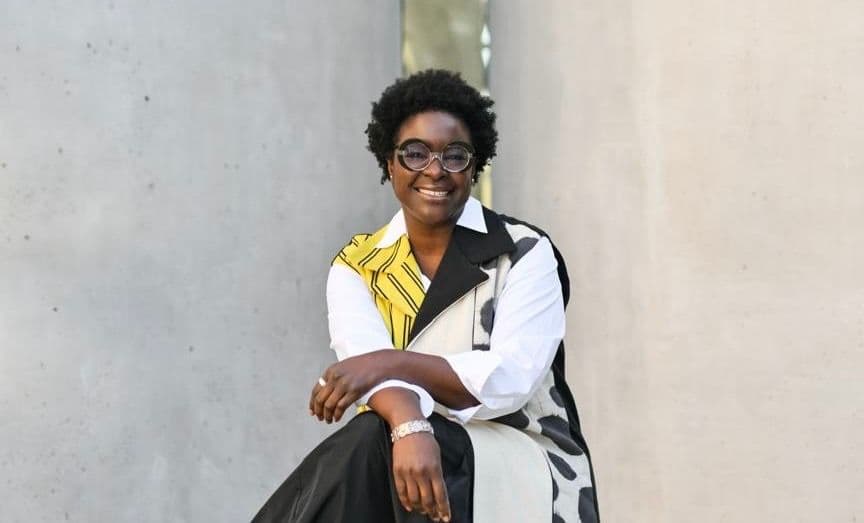
Elvira Dyangani Ose, Zeitz MOCAA Artistic Director. Photo by Ramiie G, courtesy of Zeitz MOCAA.
Her arrival also comes during a significant period of transition for Zeitz MOCAA. The museum is entering its second decade following the death of Koyo Kouoh, its former Executive Director and Chief Curator, in 2025. Kouoh played a defining role in the institution’s development and in positioning Cape Town as an important site within global contemporary art. Dyangani Ose inherits an institution with an established international profile while facing the question of how that foundation can evolve without losing its connection to the artistic communities and histories that give it meaning.
That question extends beyond the museum itself. Zeitz MOCAA operates within a rapidly changing African art ecosystem, where artist-led spaces, galleries, biennials, museums, archives, and independent initiatives are increasingly shaping how contemporary practices circulate. For a major institution in Cape Town, the challenge is not simply to increase international visibility, but to consider how its resources and collections can participate meaningfully in the production of knowledge about contemporary art on the continent.
Dyangani Ose has emphasised the importance of working closely with artists, the museum team, supporters, and communities in Cape Town and beyond. Such an approach positions the museum as a space of exchange rather than simply a place where exhibitions are presented. It also raises questions about how a major institution can remain accountable to the contexts from which the art it presents emerges, particularly when its audiences and networks extend far beyond South Africa.
As Zeitz MOCAA approaches its tenth anniversary, Dyangani Ose’s appointment therefore arrives at a moment when the institution has both an established history and an opportunity to reconsider its future. The next phase will be measured not only by the exhibitions it produces, but by how it develops its collections, supports research, works with artists, and strengthens connections across the continent and its diasporas.
Her arrival does not mark a departure from the questions that have shaped Zeitz MOCAA since its founding. It places those questions under renewed consideration. What should a major contemporary art museum in Africa make possible in its second decade, and how can an institution of international reach remain responsive to the artists, communities, and histories that continue to shape the continent’s contemporary art landscape?
June 15, 2026
May 19, 2026
May 11, 2026
April 13, 2026