
Connect
© 2026 Kyekyekule Africa. All rights reserved.
kyekyekule.africa
© 2026 Kyekyekule Africa. All rights reserved.
kyekyekule.africa

Emmanuel Agyapong
Author
Published on:
October 3, 2026
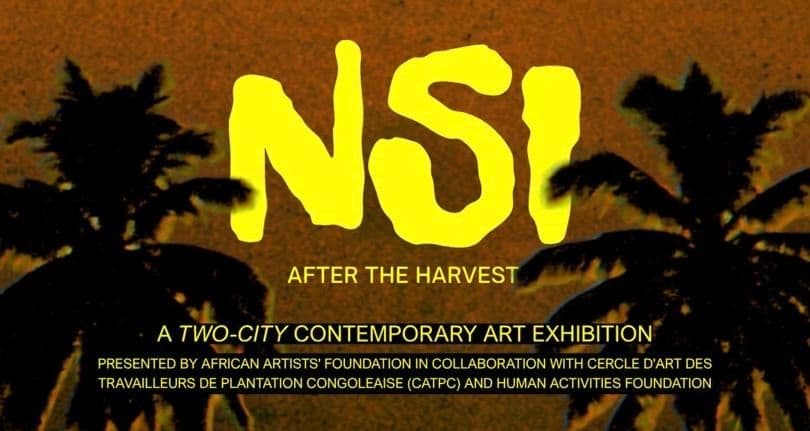
For the first time, an art collection assembled by Congolese plantation workers will be publicly presented in Lagos, bringing questions of land, labour, ownership and restitution into a Nigerian context.
Nsi: After the Harvest, organized by the African Artists’ Foundation (AAF) in partnership with the Cercle d’Art des Travailleurs de Plantation Congolaise (CATPC) and Human Activities, opens on 5 October 2026 at the African Artists’ Foundation in Victoria Island, Lagos, and runs through 22 November.
At the centre of the exhibition is CATPC’s work in Lusanga, Democratic Republic of the Congo, where the collective connects artistic production with the reclamation of former plantation land. Its wider project involves transforming this land into community-owned forests and food gardens, linking the circulation of art and its economic value to the recovery of land and livelihoods.
This relationship between art and ownership is central to CATPC’s approach. The collective’s collection raises questions about who owns an artwork, who benefits when its value increases, and whether wealth generated through the art market can support communities and landscapes from which wealth was historically extracted.
The collection includes works by internationally recognised artists including Marlene Dumas, Olafur Eliasson, Luc Tuymans, Chéri Samba, Francis Alÿs, Jan Dibbets, Lydia Ourahmane and Christopher Kulendran Thomas. Its presentation in Lagos places these works within a broader African conversation about cultural ownership, museums and the legacies of plantation economies.
Land, Memory and What Remains
The exhibition takes its title from Nsi, a Kikongo word referring to land, earth and the realm of the ancestors. After the Harvest asks what remains after resources have been extracted and labour expended. It considers the effects of extraction on bodies and landscapes, while also examining the histories carried through materials and the responsibilities that persist after wealth has been removed.
Four themes structure the exhibition: Sediment, Signal, Residue and Repair. Sediment considers histories held in land and memory. Signal looks at how voices and claims travel across distance. Residue focuses on the material and social consequences of extraction, while Repair turns toward restoration and the work required to address what has been damaged.
Together, these themes extend the meaning of restitution beyond the return of cultural objects. They position land, ownership, livelihoods and cultural authority within the same conversation.
A Wider Artistic Conversation
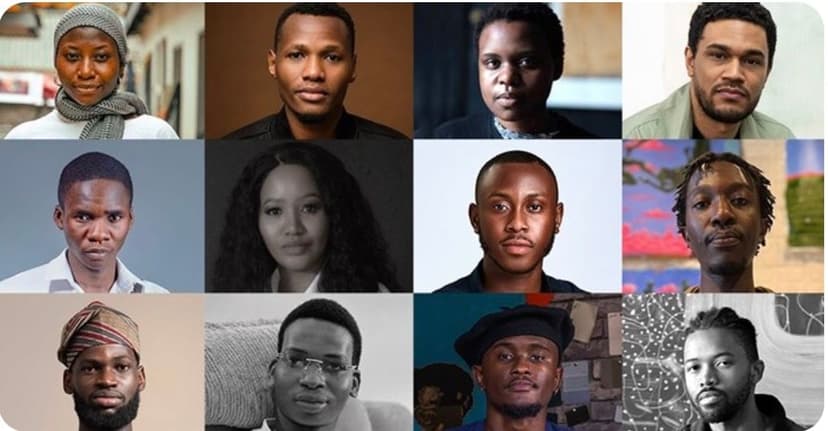
Curated by Nkhensani Mkhari, with Azu Nwagbogu as project advisor, the exhibition forms part of AAF’s Dig Where You Stand program. Alongside CATPC, it brings together Patrick Bongoy, Maurice Mbikayi, Wonder Buhle Mbambo, Sandra Mujinga, Gerald Chukwuma, Uche Uzorka, Odili Donald Odita, Luke Agada, Ozuma Patrick Chidiebube, Emma Odumade and Ntshepe Tsekere Bopape, known as Mo Laudi.
The exhibition therefore extends beyond CATPC’s collection to consider how different artistic practices approach histories of extraction, displacement, memory and ecological change.
Public Symposium in Lagos
The public programme begins with a symposium on 8 October at the J. Randle Centre for Yorùbá Culture & History in Onikan, Lagos. Artists, cultural practitioners and audiences will discuss land, heritage, extraction and ecological repair.
AAF Founder and Artistic Director Azu Nwagbogu will deliver the opening remarks, followed by a curatorial address from Nkhensani Mkhari. Artist Renzo Martens will give the keynote, “What’s Up with This Renzo Martens? Attempting to Connect Museums to the Plantations That Funded Them (2010–2026),” examining the relationship between Western art institutions and plantation wealth through his long-term engagement with CATPC.
CATPC representatives Céd’art Tamasala and Matthieu Kasiama will present “The Collection That Regrows the Sacred Forest,” addressing the collective’s ownership of the collection and its connection to land and forest restoration in Lusanga.
Additional sessions will consider land and memory, the effects of extraction on bodies and materials, and the practical work of repair, with contributions from Dr. Oluwatoyin Zainab Sogbesan, Enotie Ogbebor, Ozuma Patrick Chidiebube and Jelili Atiku.
Film, Performance and After Hours
On 9 October, the programme continues with a screening of Sammy Baloji’s The Tree of Authenticity (2025) at the African Artists’ Foundation. The film extends the exhibition’s investigation into colonial scientific research, ecology and extraction in the Congo.
The screening will be followed by an After Hours programme of music, performance and informal exchange, extending the exhibition’s themes beyond the gallery setting.
From Lagos to Dakar
The project will later move to Senegal for a Dakar chapter at Malidoma Popenguine, running from 22 November to 19 December 2026 as part of the Dak’Art Biennale Off program.
Co-curated by Nkhensani Mkhari, Charlotte Brathwaite and Malick Welli, the Dakar chapter will feature a distinct artist selection and local focus, continuing the project’s examination of land, extraction, memory and repair in another West African context.
What Can Art Return?
In Lagos, Nsi: After the Harvest begins with a collection whose history of ownership challenges the conventional direction of cultural wealth. Built by plantation workers and connected to efforts to reclaim land and restore forests, the collection proposes a different relationship between artistic value and the communities from which value has historically been extracted.
The exhibition therefore places the art object within a larger material system. Its significance lies not only in what is displayed, but in where the value generated by art can go and what that value might make possible.
For CATPC, the collection is connected to land that can be reclaimed, forests that can be restored and livelihoods that can be rebuilt. In Lagos, that model brings a different question into the gallery: what can art return to the land and communities from which so much has been taken?
October 7, 2026
September 29, 2026
September 19, 2026

September 14, 2026